It is a good thing to “rejoice in the Lord.”Perhaps you have tried it but seemed to fail at first. Don’t give it a second thought, and forge ahead.
Even when you cannot feel any joy, there is no spring in your step, nor any comfort or encouragement in your life, continue
to rejoice and “consider it pure joy” (James 1:2).
Whenever you face trials of many kinds (James 1:2), regard it as joy, delight in it, and God will reward your faith.
Do you believe that your heavenly Father will let you carry the banner of His victory and joy to the very front of the battle, only to calmly withdraw to see you captured or beaten back by the enemy? NEVER!
His Holy Spirit will sustain you in your bold advance and fill your heart with gladness and praise.You will find that your heart is exhilarated and refreshed by the fullness within.
Lord, teach me to rejoice in You to “be joyful always”
(1 Thess. 5:16).
~Selected~
The weakest saint may satan rout, Who meets him with a praiseful shout.
Be filled with the Spirit. . . . Sing and make music in your heart to the Lord. Ephesians 5:18–19
In these verses, the apostle Paul urges us to use singing as
inspiration in our spiritual life. He warns his readers to seek
motivation not through the body but through the spirit, not by stimulating the flesh but by exalting the soul.
Sometimes a light surprises The Christian while he sings.
Let us sing even when we do not feel like it, for in this way we give wings to heavy feet and turn weariness into strength.
~John Henry Jowett~
About midnight Paul and Silas were praying and singing hymns to God, and the other prisoners were listening to them.
Acts 16:25
O Paul, what a wonderful example you are to us! You gloried
in the fact that you “bear on [your] body the marks of Jesus”
(Gal. 6:17).You bore the marks from nearly being stoned to death, from three times being “beaten with rods”(2 Cor. 11:25),
from receiving 195 lashes from the Jews,and from being bloodily
beaten in the Philippian jail. Surely the grace that enabled
you to sing praises while enduring such suffering is sufficient
for us.
~J. Roach~
Oh, let us rejoice in the Lord, evermore, When darts of the Tempter are flying, For satan still dreads, as he oft did before,
Our singing much more than our crying.
We Pray That The Seeds Of Truth Contained In This Blog Will Penetrate The Good Soil Of Your Heart And Bear Much Fruit.
Friday, February 14, 2014
Monday, February 10, 2014
Knowing How To Abound
Philippines 4:12 I know both how to be abased, and I know how to abound: every where and in all things I am instructed both to be full and to be hungry, both to abound and to suffer need.
There are many who know "how to be abased" who have not learned "how to abound."
When they are set upon the top of a pinnacle their heads grow dizzy, and they are ready to fall.
The Christian far oftener disgraces his profession in prosperity than in adversity.
It is a dangerous thing to be prosperous. The crucible of adversity is a less severe trial to the Christian than the fining-pot of prosperity.
Oh, what leanness of soul and neglect of spiritual things have been brought on through the very mercies and bounties of God!
Yet this is not a matter of necessity, for the apostle tells us that he knew how to abound. When he had much he knew how to use it. Abundant grace enabled him to bear abundant prosperity.
When he had a full sail he was loaded with much ballast, and so floated safely.
It needs more than human skill to carry the brimming cup of mortal joy with a steady hand, yet Paul had learned that skill, for he declares, "In all things I am instructed both to be full and to be hungry."
It is a divine lesson to know how to be full, for the Israelites were full once, but while the flesh was yet in their mouth, the wrath of God came upon them.
Many have asked for mercies that they might satisfy their own hearts' lust. Fulness of bread has often made fulness of blood, and that has brought on wantonness of spirit.
When we have much of God's providential mercies, it often happens that we have but little of God's grace, and little gratitude for the bounties we have received.
We are full and we forget God: satisfied with earth, we are content to do without heaven.
Rest assured it is harder to know how to be full than it is to know how to be hungry—so desperate is the tendency of human nature to pride and forgetfulness of God.
Take care that you ask in your prayers that God would teach you "how to be full."
Let not the gifts Thy love bestows Estrange our hearts from Thee.
~Charles Spurgeon~
There are many who know "how to be abased" who have not learned "how to abound."
When they are set upon the top of a pinnacle their heads grow dizzy, and they are ready to fall.
The Christian far oftener disgraces his profession in prosperity than in adversity.
It is a dangerous thing to be prosperous. The crucible of adversity is a less severe trial to the Christian than the fining-pot of prosperity.
Oh, what leanness of soul and neglect of spiritual things have been brought on through the very mercies and bounties of God!
Yet this is not a matter of necessity, for the apostle tells us that he knew how to abound. When he had much he knew how to use it. Abundant grace enabled him to bear abundant prosperity.
When he had a full sail he was loaded with much ballast, and so floated safely.
It needs more than human skill to carry the brimming cup of mortal joy with a steady hand, yet Paul had learned that skill, for he declares, "In all things I am instructed both to be full and to be hungry."
It is a divine lesson to know how to be full, for the Israelites were full once, but while the flesh was yet in their mouth, the wrath of God came upon them.
Many have asked for mercies that they might satisfy their own hearts' lust. Fulness of bread has often made fulness of blood, and that has brought on wantonness of spirit.
When we have much of God's providential mercies, it often happens that we have but little of God's grace, and little gratitude for the bounties we have received.
We are full and we forget God: satisfied with earth, we are content to do without heaven.
Rest assured it is harder to know how to be full than it is to know how to be hungry—so desperate is the tendency of human nature to pride and forgetfulness of God.
Take care that you ask in your prayers that God would teach you "how to be full."
Let not the gifts Thy love bestows Estrange our hearts from Thee.
~Charles Spurgeon~
Thursday, February 6, 2014
We Pray But He Answers In His Way
Often it is simply the answers to our prayers that cause many of the difficulties in the Christian life. We pray for patience, and our Father sends demanding people our way who test us to the limit, because . . . suffering produces perseverance (Rom. 5:3).
We pray for a submissive spirit, and God sends suffering again, for we learn to be obedient in the same way Christ “learned obedience from what he suffered” (Heb. 5:8).
We pray to be unselfish, and God gives us opportunities to
sacrifice by placing other people’s needs first and by laying down our lives for other believers.
We pray for strength and humility, and “a messenger of Satan”
(2 Cor. 12:7) comes to torment us until we lie on the ground pleading for it to be withdrawn.
We pray to the Lord, as His apostles did, saying, “Increase our
faith!” (Luke 17:5).Then our money seems to take wings and fly away; our children become critically ill; an employee becomes careless, slow, and wasteful; or some other new trial comes upon us, requiring more faith than we have ever before experienced.
We pray for a Christlike life that exhibits the humility of a lamb.Then we are asked to perform some lowly task, or we are unjustly accused and given no opportunity to explain, for “he
was led like a lamb to the slaughter, and . . . did not open his
mouth” (Isa. 53:7).
We pray for gentleness and quickly face a storm of temptation
to be harsh and irritable.
We pray for quietness, and suddenly every nerve is stressed to its limit with tremendous tension so that we may learn that when He sends His peace, no one can disturb it.
We pray for love for others, and God sends unique suffering by sending people our way who are difficult to love and who say things that get on our nerves and tear at our heart.
He does this because “love is patient, love is kind. . . . It is not
rude, . . . it is not easily angered. . . . It always protects, always
trusts, always hopes, always perseveres. Love never fails.”
(1 Cor. 13:4–5, 7–8).
Yes, we pray to be like Jesus, and God’s answer is “I have tested you in the furnace of affliction” (Isa. 48:10); “Will your courage endure or your hands be strong?” (Ezek. 22:14); “Can you drink the cup?” (Matt. 20:22).
The way to peace and victory is to accept every circumstance and every trial as being straight from the hand of our loving Father; to live “with him in the heavenly realms” (Eph. 2:6), above the clouds, in the very presence of His throne; and to look down from glory on our circumstances as being lovingly and divinely appointed.
~Selected~
I prayed for strength, and then I lost awhile All sense of nearness, human and divine; The love I leaned on failed and pierced my heart, The hands I clung to loosed themselves from mine; But while I swayed, weak, trembling, and alone, The everlasting arms upheld my own.
I prayed for light; the sun went down in clouds, The moon was darkened by a misty doubt, The stars of heaven were dimmed by earthly fears, And all my little candle flames burned out; But while I sat in shadow, wrapped in night, The face of Christ made all the darkness bright.
I prayed for peace, and dreamed of restful ease, A slumber free from pain, a hushed repose; Above my head the skies were black with storm, And fiercer grew the onslaught of my foes; But while the battle raged, and wild winds blew, I heard His voice and perfect peace I knew.
I thank You, Lord,You were too wise to heed My feeble prayers, and answer as I sought.
Since these rich gifts Your bounty has bestowed Have brought me more than all I asked or thought.
Giver of good, so answer each request With Your own giving, better than my best.
~Annie Johnson Flint~
We pray for a submissive spirit, and God sends suffering again, for we learn to be obedient in the same way Christ “learned obedience from what he suffered” (Heb. 5:8).
We pray to be unselfish, and God gives us opportunities to
sacrifice by placing other people’s needs first and by laying down our lives for other believers.
We pray for strength and humility, and “a messenger of Satan”
(2 Cor. 12:7) comes to torment us until we lie on the ground pleading for it to be withdrawn.
We pray to the Lord, as His apostles did, saying, “Increase our
faith!” (Luke 17:5).Then our money seems to take wings and fly away; our children become critically ill; an employee becomes careless, slow, and wasteful; or some other new trial comes upon us, requiring more faith than we have ever before experienced.
We pray for a Christlike life that exhibits the humility of a lamb.Then we are asked to perform some lowly task, or we are unjustly accused and given no opportunity to explain, for “he
was led like a lamb to the slaughter, and . . . did not open his
mouth” (Isa. 53:7).
We pray for gentleness and quickly face a storm of temptation
to be harsh and irritable.
We pray for quietness, and suddenly every nerve is stressed to its limit with tremendous tension so that we may learn that when He sends His peace, no one can disturb it.
We pray for love for others, and God sends unique suffering by sending people our way who are difficult to love and who say things that get on our nerves and tear at our heart.
He does this because “love is patient, love is kind. . . . It is not
rude, . . . it is not easily angered. . . . It always protects, always
trusts, always hopes, always perseveres. Love never fails.”
(1 Cor. 13:4–5, 7–8).
Yes, we pray to be like Jesus, and God’s answer is “I have tested you in the furnace of affliction” (Isa. 48:10); “Will your courage endure or your hands be strong?” (Ezek. 22:14); “Can you drink the cup?” (Matt. 20:22).
The way to peace and victory is to accept every circumstance and every trial as being straight from the hand of our loving Father; to live “with him in the heavenly realms” (Eph. 2:6), above the clouds, in the very presence of His throne; and to look down from glory on our circumstances as being lovingly and divinely appointed.
~Selected~
I prayed for strength, and then I lost awhile All sense of nearness, human and divine; The love I leaned on failed and pierced my heart, The hands I clung to loosed themselves from mine; But while I swayed, weak, trembling, and alone, The everlasting arms upheld my own.
I prayed for light; the sun went down in clouds, The moon was darkened by a misty doubt, The stars of heaven were dimmed by earthly fears, And all my little candle flames burned out; But while I sat in shadow, wrapped in night, The face of Christ made all the darkness bright.
I prayed for peace, and dreamed of restful ease, A slumber free from pain, a hushed repose; Above my head the skies were black with storm, And fiercer grew the onslaught of my foes; But while the battle raged, and wild winds blew, I heard His voice and perfect peace I knew.
I thank You, Lord,You were too wise to heed My feeble prayers, and answer as I sought.
Since these rich gifts Your bounty has bestowed Have brought me more than all I asked or thought.
Giver of good, so answer each request With Your own giving, better than my best.
~Annie Johnson Flint~
Saturday, February 1, 2014
"This Is My Doing"
My child, I have a message for you today. Let me whisper it
in your ear so any storm clouds that may arise will shine with
glory, and the rough places you may have to walk will be made
smooth. It is only four words, but let them sink into your inner
being, and use them as a pillow to rest your weary head. “This
is my doing.”
Have you ever realized that whatever concerns you concerns Me too? “For whoever touches you touches the apple of my eye” (Zech.2:8).
You are precious and honored in my sight (Isa. 43:4).Therefore it is My special delight to teach you.
I want you to learn when temptations attack you, and the enemy comes in “like a pent-up flood” (Isa. 59:19), that “this is my doing” and that your weakness needs My strength, and your safety lies in letting Me fight for you.
Are you in difficult circumstances, surrounded by people who do not understand you, never ask your opinion, and always push you aside? “This is my doing.” I am the God of circumstances.
You did not come to this place by accident—you are exactly where I meant for you to be.
Have you not asked Me to make you humble? Then see that
I have placed you in the perfect school where this lesson is
taught.
Your circumstances and the people around you are only being used to accomplish My will.
Are you having problems with money, finding it hard to make ends meet? “This is my doing,” for I am the One who keeps your finances, and I want you to learn to depend upon Me. My supply is limitless and I “will meet all your needs” Phil. 4:19.
I want you to prove My promises so no one may say,“You did not trust in the Lord your God” (Deut. 1:32).
Are you experiencing a time of sorrow? “This is my doing.” I
am “a man of sorrows, and familiar with suffering” (Isa. 53:3). I
have allowed your earthly comforters to fail you, so that by turning to Me you may receive “eternal encouragement and good hope” (2 Thess. 2:16).
Have you longed to do some great work for Me but instead have been set aside on a bed of sickness and pain? “This is my doing.” You were so busy I could not get your attention, and I wanted to teach you some of My deepest truths.
They also serve who only stand and wait. In fact, some of My
greatest workers are those physically unable to serve, but who have learned to wield the powerful weapon of prayer.
Today I place a cup of holy oil in your hands. Use it freely, My child. Anoint with it every new circumstance, every word that hurts you, every interruption that makes you impatient,and every weakness you have.
The pain will leave as you learn to see Me in all things.
~Laura A. Barter Snow~
This is from Me, the Savior said, As bending low He kissed my brow, “For One who loves you thus has led.
Just rest in Me, be patient now, Your Father knows you have need of this, Though, why perhaps you cannot see—
Grieve not for things you’ve seemed to miss. The thing I send is best for thee.”
Then, looking through my tears, I plead, “Dear Lord, forgive, I did not know, It will not be hard since You do tread, Each path before me here below.”
And for my good this thing must be, His grace sufficient for each test.
So still I’ll sing,“Whatever be God’s way for me is always best.”
Tuesday, January 28, 2014
Will Not Be Moved
Psa 46:5 God is in the midst of her; she shall not be moved: God shall help her, and that right early.
Will not be moved—what an inspiring declaration!
Is it possible for us who are so easily moved by earthly things to come to a point where nothing can upset us or disturb our peace? The answer is yes, and the apostle Paul knew it.
When he was on his way to Jerusalem, the Holy Spirit warned him that “prison and hardships” (Acts 20:23) awaited him.Yet he could triumphantly say,“But none of these things move me” (Acts 20:24 KJV).
Everything in Paul’s life and experience that could be disturbed
had already been shaken, and he no longer considered his life or any of his possessions as having any earthly value.
And if we will only let God have His way with us, we can come to the same point.
Then, like Paul, neither the stress and strain of little things nor the great and heavy trials of life will have enough power to move us from “the peace of God, which transcends all understanding” (Phil. 4:7).
God declares this peace to be the inheritance of those who have learned to rest only on Him.
Him who overcomes I will make a pillar in the temple of
my God. Never again will he leave it (Rev. 3:12). Becoming
as immovable as a pillar in the house of God is such a worthy objective that we would gladly endure all the necessary trials that take us there!
~Hannah Whitall Smith~
When God is the center of a kingdom or a city, He makes
it strong “like Mount Zion, which cannot be shaken” (Ps. 125:1).
And when God is the center of a soul, although disasters may crowd in on all sides and roar like the waves of the sea, there is a constant calm within.
The world can neither give nor take away this kind of peace.
What is it that causes people to shake like leaves today at the first hint of danger? It is simply the lack of God living in their soul, and having the world in their hearts instead.
~R. Leighton~
Those who trust in the Lord are like Mount Zion, which cannot be shaken but endures forever
(Ps. 125:1)
Will not be moved—what an inspiring declaration!
Is it possible for us who are so easily moved by earthly things to come to a point where nothing can upset us or disturb our peace? The answer is yes, and the apostle Paul knew it.
When he was on his way to Jerusalem, the Holy Spirit warned him that “prison and hardships” (Acts 20:23) awaited him.Yet he could triumphantly say,“But none of these things move me” (Acts 20:24 KJV).
Everything in Paul’s life and experience that could be disturbed
had already been shaken, and he no longer considered his life or any of his possessions as having any earthly value.
And if we will only let God have His way with us, we can come to the same point.
Then, like Paul, neither the stress and strain of little things nor the great and heavy trials of life will have enough power to move us from “the peace of God, which transcends all understanding” (Phil. 4:7).
God declares this peace to be the inheritance of those who have learned to rest only on Him.
Him who overcomes I will make a pillar in the temple of
my God. Never again will he leave it (Rev. 3:12). Becoming
as immovable as a pillar in the house of God is such a worthy objective that we would gladly endure all the necessary trials that take us there!
~Hannah Whitall Smith~
When God is the center of a kingdom or a city, He makes
it strong “like Mount Zion, which cannot be shaken” (Ps. 125:1).
And when God is the center of a soul, although disasters may crowd in on all sides and roar like the waves of the sea, there is a constant calm within.
The world can neither give nor take away this kind of peace.
What is it that causes people to shake like leaves today at the first hint of danger? It is simply the lack of God living in their soul, and having the world in their hearts instead.
~R. Leighton~
Those who trust in the Lord are like Mount Zion, which cannot be shaken but endures forever
(Ps. 125:1)
Saturday, January 25, 2014
Fighting the Unholy Trinity
The principal fight of the Christian is with the world, the flesh, and the devil. These are their never-dying foes. These are the three chief enemies against whom the Christian must wage war.
Unless they get the victory over these three, all other victories are useless and vain.
If they had a nature like an angel, and were not a fallen creature, the warfare would not be so essential.
The Christian must fight the flesh. Even after conversion they carry within them a nature prone to evil, and a heart weak and unstable as water. To keep that heart from going astray, there is need of a daily struggle and a daily wrestling in prayer. “I discipline my body,” cries Paul, “and bring it under subjection.” I see a law in my members at war against the law of my mind, and bringing me into captivity.
O wretched man that I am, who shall deliver me from this body of death? “They that are Christ’s have crucified the flesh with its affections and lusts.” “Mortify your members which are upon the earth” (1 Cor. 9:27; Rom. 7:23, 24; Gal. 5:24; Col. 3:5).
The Christian must fight the world. The subtle influence of that mighty enemy must be daily resisted, and without a daily battle can never be overcome. The love of the world’s good things, the fear of the world’s laughter or blame, the secret desire to keep in with the world, the secret wish to do as others in the world do, and not to run into extremes—all these are spiritual foes which beset the Christian continually on their way to heaven, and must be conquered.
The friendship of the world is enmity with God: whosoever therefore will be a friend of the world, is the enemy of God.” “If any man love the world, the love of the Father is not in him.”
Whatsoever is born of God overcomes the world. “Be not conformed to this world” (James 4:4; 1 John 2:15; 1 John 5:4; Rom. 12:2).
The Christian must fight the devil. That old enemy of mankind is not dead. Ever since the fall of Adam and Eve he has been going to and fro in the earth, and walking up and down in it, and striving to compass one great end—the ruin of a person’s soul.
Never slumbering and never sleeping, he is always going about as a lion seeking whom he may devour. An unseen enemy, he is always near us, about our path and about our bed, and spying out all our ways.
A murderer and a liar from the beginning, he labors night and day to cast us down to hell. Sometimes by leading into superstition, sometimes by suggesting infidelity, sometimes by one kind of tactics and sometimes by another, he is always carrying on a campaign against our souls.
Satan has desired to have you, that he may sift you as wheat.
This mighty adversary must be daily resisted. But “this kind does not come out” except by watching and praying, and putting on the whole armor of God. The strong man armed will never be kept out of our hearts without a daily battle. (Job 1:7; 1 Peter 5:8; John 8:44; Luke 22:31; Eph. 4:11).
Perhaps you think these statements too strong. You fancy that I am going too far, and laying on the colors too thickly.
You are secretly saying to yourself, that men and women may surely get to heaven without all this trouble and warfare and fighting.
Remember the maxim of the wisest general that ever lived in England: “In time of war it is the worst mistake to underrate your enemy, and try to make a little war.”
This Christian warfare is no light matter.
~ J.C. Ryle~
Friday, January 24, 2014
The Paralysis Of A Questioning Mind
This is peculiarly the peril of the severely tried children
of God, or the lurking danger in times and places of adversity.
A doubt as to
the love, the wisdom, the power, the faithfulness of God.
Few there be that pass
through without at least the consciousness of this spectre, and not many have
passed through deep waters and intense fires without a Godward "Why?" at least
in their thought. "Why should it be me?" "Why should it always
be me?"
The ruin of the race was resultant from the acceptance of an
insinuation from Satan that God was after all not really favorable to the
highest well-being of man;
That there was something He was keeping back, and
suspicion of God has always been a master-stroke against the primary law of
union with God — faith.
When this seed of doubt has been sown in the mind and allowed
to remain it is not long before every phase of spiritual vitality is paralysed;
prayer, fellowship, the Word, ministry, service, testimony; and God can do
nothing with a doubter.
~T. Austin Sparks~
Wednesday, January 22, 2014
The Key To The Winds
Psa 103:19 The LORD hath prepared his throne in the heavens; and his kingdom ruleth over all.
Some time ago as I went out my door in the early spring, a blast
of easterly wind rounded the corner. It seemed defiant and merciless and was fierce and dry, raising a cloud of dust ahead of it.
As I removed the key from the door, I quite impatiently began
to say, “I wish the wind would . . .” What I was about to say was
change, but my thought was stopped and the sentence was never finished.
As I continued on my way, this incident became a parable for me. I imagined an angel handing me a key and saying,“My Master sends you His love and asked me to give you this. Wondering, I asked,“What is it?” “It is the key to the winds,”the angel said and then disappeared.
My first thought was,“This indeed will bring me happiness.”
So I hurried high into the hills to the source of the winds and
stood amid the caves.
I proclaimed,“I will do away with the terrible east wind it will never plague us again!” I summoned that unfriendly wind to me, closed the door behind it, and heard it echoing through the hollow caves.
As I turned the key, triumphantly locking it in, I said,“There, I am finished with that.”
Then looking around me, I asked myself,“What should I put
in its place?” I thought of the warm southerly wind and how
pleasant it must be to newborn lambs and new flowers and
plants of all kinds.
But as I put the key in the door, it began to burn my hand. I cried aloud,“What am I doing? Who knows what damage I may cause? How do I know what the fields want and need? Ten thousand problems may result from this foolish wish of mine!”
Bewildered and ashamed, I looked up and asked the Lord to send His angel to take away the key.
Then I promised I would never ask for it again.
To my amazement,the Lord Himself came and stood by me. He stretched out His hand to take the key, and as I placed it there, I saw it touch that sacred scar.
I was filled with remorse as I wondered how I could ever have complained about anything done by Him who bore such sacred signs of His love.
Then He took the key and hung it on His belt. I asked,“Do you keep the key to the winds?” “I do, my child,” He graciously answered.
And as He spoke, I noticed that all the keys to my life were hanging there as well.
He saw my look of amazement and asked, “Did you not know, dear child, that my ‘kingdom rules over all’?”
If you rule ‘over all, I questioned, “is it safe to complain about anything?”
Then He tenderly laid His hand upon me to say,“My dear child, your only safety comes from loving, trusting, and praising Me through everything.”
~Mark Guy Pearse~
Some time ago as I went out my door in the early spring, a blast
of easterly wind rounded the corner. It seemed defiant and merciless and was fierce and dry, raising a cloud of dust ahead of it.
As I removed the key from the door, I quite impatiently began
to say, “I wish the wind would . . .” What I was about to say was
change, but my thought was stopped and the sentence was never finished.
As I continued on my way, this incident became a parable for me. I imagined an angel handing me a key and saying,“My Master sends you His love and asked me to give you this. Wondering, I asked,“What is it?” “It is the key to the winds,”the angel said and then disappeared.
My first thought was,“This indeed will bring me happiness.”
So I hurried high into the hills to the source of the winds and
stood amid the caves.
I proclaimed,“I will do away with the terrible east wind it will never plague us again!” I summoned that unfriendly wind to me, closed the door behind it, and heard it echoing through the hollow caves.
As I turned the key, triumphantly locking it in, I said,“There, I am finished with that.”
Then looking around me, I asked myself,“What should I put
in its place?” I thought of the warm southerly wind and how
pleasant it must be to newborn lambs and new flowers and
plants of all kinds.
But as I put the key in the door, it began to burn my hand. I cried aloud,“What am I doing? Who knows what damage I may cause? How do I know what the fields want and need? Ten thousand problems may result from this foolish wish of mine!”
Bewildered and ashamed, I looked up and asked the Lord to send His angel to take away the key.
Then I promised I would never ask for it again.
To my amazement,the Lord Himself came and stood by me. He stretched out His hand to take the key, and as I placed it there, I saw it touch that sacred scar.
I was filled with remorse as I wondered how I could ever have complained about anything done by Him who bore such sacred signs of His love.
Then He took the key and hung it on His belt. I asked,“Do you keep the key to the winds?” “I do, my child,” He graciously answered.
And as He spoke, I noticed that all the keys to my life were hanging there as well.
He saw my look of amazement and asked, “Did you not know, dear child, that my ‘kingdom rules over all’?”
If you rule ‘over all, I questioned, “is it safe to complain about anything?”
Then He tenderly laid His hand upon me to say,“My dear child, your only safety comes from loving, trusting, and praising Me through everything.”
~Mark Guy Pearse~
Sunday, January 19, 2014
Put Your Hope In GOD
Psa 43:5 Why art thou cast down, O my soul? and why art thou disquieted within me? hope in God: for I shall yet praise him, who is the health of my countenance, and my God.
Is there ever any reason to be downcast? Actually, there are
two reasons, but only two. If we were still unbelievers,we would
have a reason to be downcast; or if we have been converted but
continue to live in sin,we are downcast as a consequence.
Except for these two conditions, there is never a reason to be downcast, for everything else may be brought to God “by prayer and petition, with thanksgiving” (Phil. 4:6).
And through all our times of need, difficulty, and trials, we may exercise faith in the power and love of God.
Put your hope in God (Ps. 43:5). Please remember there is never a time when we cannot hope in God, whatever our need or however great our difficulty may be.
Even when our situation appears to be impossible, our work is to hope in God. Our hope will not be in vain, and in the Lord’s own timing help will come.
Oh, the hundreds, even the thousands, of times I have found
this to be true in the past seventy years and four months of my
life!
When it seemed impossible for help to come, it did come,
for God has His own unlimited resources. In ten thousand different ways, and at ten thousand different times, God’s help may come to us.
Our work is to lay our petitions before the Lord, and in childlike simplicity to pour out our hearts before Him, saying, “I do not deserve that You should hear me and answer my requests, but for the sake of my precious Lord Jesus; for His sake, answer my prayer.
And give me grace to wait patiently until it pleases You to grant my petition. For I believe You will do it in Your own time and way.” “For I will yet praise him” (Ps. 43:5).
More prayer, more exercising of our faith, and more patient waiting leads to blessings—abundant blessings.
I have found it to be true many hundreds of times, and therefore I continually say to myself, “Put your hope in God.”
~George Mueller~
Is there ever any reason to be downcast? Actually, there are
two reasons, but only two. If we were still unbelievers,we would
have a reason to be downcast; or if we have been converted but
continue to live in sin,we are downcast as a consequence.
Except for these two conditions, there is never a reason to be downcast, for everything else may be brought to God “by prayer and petition, with thanksgiving” (Phil. 4:6).
And through all our times of need, difficulty, and trials, we may exercise faith in the power and love of God.
Put your hope in God (Ps. 43:5). Please remember there is never a time when we cannot hope in God, whatever our need or however great our difficulty may be.
Even when our situation appears to be impossible, our work is to hope in God. Our hope will not be in vain, and in the Lord’s own timing help will come.
Oh, the hundreds, even the thousands, of times I have found
this to be true in the past seventy years and four months of my
life!
When it seemed impossible for help to come, it did come,
for God has His own unlimited resources. In ten thousand different ways, and at ten thousand different times, God’s help may come to us.
Our work is to lay our petitions before the Lord, and in childlike simplicity to pour out our hearts before Him, saying, “I do not deserve that You should hear me and answer my requests, but for the sake of my precious Lord Jesus; for His sake, answer my prayer.
And give me grace to wait patiently until it pleases You to grant my petition. For I believe You will do it in Your own time and way.” “For I will yet praise him” (Ps. 43:5).
More prayer, more exercising of our faith, and more patient waiting leads to blessings—abundant blessings.
I have found it to be true many hundreds of times, and therefore I continually say to myself, “Put your hope in God.”
~George Mueller~
Tuesday, January 14, 2014
Hell's Hatred Of The Vessel Of Testimony
Nebuchadnezzar dreamed a dream, sent for all his wise men to interpret - no one could, impulsively he commanded that they all should be destroyed, and it says: "And they sought Daniel and his companions to be slain." That means Daniel was a marked man by those who had this power in their hands.
Why does it say: "And they sought Daniel and his companions to be slain." Well, he was not one of the Chaldean or Babylonian wise men or magicians, but they included him and his friends. They had not asked him if he could interpret the dream, they had not given him a chance, but they sought to kill him.
You see the impulsiveness of hell back of that, to get four men who had not been given a chance, to kill them, to sweep them in, to stampede this whole thing in order to get those four men. That is what Herod did; he swept in all the babes in order to get one. That is what Pharaoh did.
This is hell's method, just to get one, to engulf the vessel of the testimony.
We know the fiery furnace and the den of lions. We know from this book of the animosity in the hearts of men toward these. How they were scheming and designing so that they could entrap them, catch them, get rid of them.
How they gloated over the signing of that command by the king which could not be cancelled and had to go through when Daniel was caught. How they gloated over it. "Now we have got him."
Well, that is there coming from the spiritual background, but: "Daniel continued even unto the first year of king Cyrus." Why is that added just there? Why is that put in? Is that only just a little bit of historic information thrown in for narrative?
No, the Holy Spirit is saying something tremendous.
Daniel continued. Then when all this is passed, they have done their worst: "and shalt stand in thy lot, at the end of the days."
The vessel of the testimony will be there when all else is spent. It continues unto the end; it is indestructible, it is of the nature of the permanence of heaven.
It does not mean we may not die, although we may not be executed - but never was a vessel of the testimony more alive than the Apostle Paul today. He was executed. He will stand in his lot at the end.
This is a spiritual principle, a spiritual truth, and the point that I am seeking to get at is this, beloved: there has got to be something in our relationship to heaven and God's specified purpose which makes possible the manifestation of that mighty, devil-conquering life in us.
We have got to know the power of His resurrection.
That is essential to the vessel of the testimony at the end time, unto the end, to get through to the end: it means that we must be that in which the power of His resurrection is manifested.
That is not merely an obligation, that is a privilege. It is a costly privilege, but that is what the Lord needs.
I am always so glad of that correspondence between
Paul and
his Lord, that when the Lord Jesus came to die He said: "I lay down my
life, that I may take it again.
No one taketh it away from me, but I lay it down of myself. I have power to lay it down, and I have power to take it again. This commandment received I from my Father."
When the Apostle Paul came to the end he did not say: "Now I am going to be taken hold of and they are going to kill me, and I shall not be able to help myself."
He quietly, serenely announced: "The time of my departure is at hand. I have fought a good fight, I have finished my course, I have kept the faith."
There is no surrendering to fate in that. There is no capitulating to the hands of men in that.
There is, as it were, a quiet, deliberate walking out in the recognition that the Lord's time had come and not man's.
Now there is a correspondence between Paul and his Master, but note, Paul is in representation the vessel of the testimony in this age.
The testimony of Jesus was peculiarly placed within that vessel in a representative way. We have often said Paul personally embodied all the special revelation which was entrusted to him, he became a personal sign of that revelation.
The truth which was committed to him from heaven had a specific outworking in his own life and experience because he had got to represent the Church in this age in himself as the vessel of its unveiling, and the issue of the Church in this age is the expression in fullness, of the power of Christ's resurrection as triumphant over death in translation, not by the grave but by the air.
No one taketh it away from me, but I lay it down of myself. I have power to lay it down, and I have power to take it again. This commandment received I from my Father."
When the Apostle Paul came to the end he did not say: "Now I am going to be taken hold of and they are going to kill me, and I shall not be able to help myself."
He quietly, serenely announced: "The time of my departure is at hand. I have fought a good fight, I have finished my course, I have kept the faith."
There is no surrendering to fate in that. There is no capitulating to the hands of men in that.
There is, as it were, a quiet, deliberate walking out in the recognition that the Lord's time had come and not man's.
Now there is a correspondence between Paul and his Master, but note, Paul is in representation the vessel of the testimony in this age.
The testimony of Jesus was peculiarly placed within that vessel in a representative way. We have often said Paul personally embodied all the special revelation which was entrusted to him, he became a personal sign of that revelation.
The truth which was committed to him from heaven had a specific outworking in his own life and experience because he had got to represent the Church in this age in himself as the vessel of its unveiling, and the issue of the Church in this age is the expression in fullness, of the power of Christ's resurrection as triumphant over death in translation, not by the grave but by the air.
Oh, joy! oh, delight! should we go without dying;
No sickness, no sadness, no dread, and no crying."
We have sung that: that is the prospect for the Church, that is the glorious possibility, no! that is the certainty, as the final issue.
But that represents that death is robbed finally of its power, that the power of His resurrection is manifested in eluding the grave and depriving death of its object. That is Enoch.
But Paul represented that, and his last utterances are: "That I may know him, and the power of his resurrection"; yes, true: "and the fellowship of his sufferings," that is Daniel and the others.
The power of his resurrection not as something just at the beginning of his Christian life and walk, but something at the end.
And not as something merely to deliver him with all others in a general resurrection from the grave, but in a specific out-resurrection from among the dead.
That is the testimony of the Church, a vessel for that. Paul represented that specific thing for the Church in this age. Daniel continued and Daniel stands in his lot at the end.
Have you grasped the principle that is implied in that? A wonderful thing.
But beloved, you and I are called even now - though we may die, we may go by the grave - yet now, at this end time, you and I are called to be a part of that vessel in which the power of His resurrection is manifested.
That the murderous plottings of hell are eluded, are overcome, and that the murderer who comes out to destroy before the Lord's purposes are accomplished shall be baffled by the power of His resurrection in us.
When we ought to have been dead a dozen times we are still alive.
Yes, the Lord wants an adequate vessel for that, not one, two, or three scattered here and there, but an adequate vessel for that; and He is seeking that. In relation to that we are here.
You and I must not accept death until the Lord tells us the time has come. If we do, we open the door for the enemy to triumph.
Many of you do not understand that. If you do not, do not worry about it, but ask the Lord to give you the essential thing of what we are saying.
Now that all comes out of that statement: Daniel
continued. Daniel stands at the end. The vessel is there when all has been
done to see that the vessel should not be there.
The testimony is there - goes on unto the end.
~T. Austin Sparks~
The testimony is there - goes on unto the end.
~T. Austin Sparks~
Friday, January 10, 2014
In Calm Repose
Hosea 2:18 And in that day will I make a covenant for them with the beasts of the field, and with the fowls of heaven, and with the creeping things of the ground: and I will break the bow and the sword and the battle out of the earth, and will make them to lie down safely.
Yes, the saints are to have peace.
The passage from which this gracious word is taken speaks of peace "with the beasts of the field, and with the fowls of heaven, and with the creeping things of the ground."
This is peace with earthly enemies, with mysterious evils, and with little annoyances!
Any of these might keep us from lying down, but none of them shall do so.
The Lord will quite destroy those things which threaten His people: "I will break the bow and the sword, and the battle out of the earth."
Peace will be profound indeed when all the instruments of disquiet are broken to pieces.
With this pace will come rest, "So he giveth his beloved sleep."
Fully supplied and divinely quieted, believers lie down in calm repose.
This rest will be a safe one. It is one thing to lie down but quite another "to lie down safely."
We are brought to the land of promise, the house of the Father, the chamber of love, and the bosom of Christ: surely we may now "lie down safely."
It is safer for a believer to lie down in peace than to sit up and worry.
He maketh me to lie down in green pastures, We never rest till the Comforter makes us lie down.
~Charles Spurgeon~
Thursday, January 9, 2014
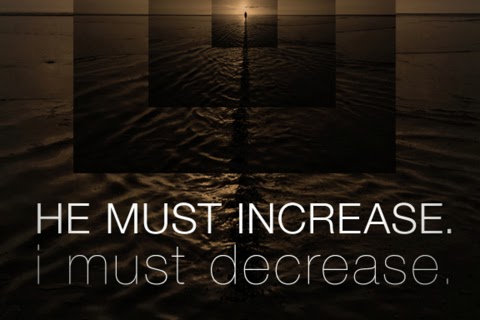
Maturity Is He Increases We Decrease
He must increase, but I must decrease. (John 3:30)
What is spiritual growth? What is spiritual maturity?
What is it to go on in the Lord?
I fear we have got mixed ideas about
this. Many think that spiritual maturity is a more comprehensive
knowledge of Christian doctrine, a larger grasp of scriptural truth, a
wider expanse of the knowledge of the things of God; and many such
features are recorded as marks of growth, development, and spiritual
maturity. Beloved, it is nothing of the kind.
The hallmark of true spiritual development and maturity is this: that we have
grown so much less and the Lord Jesus has grown so much more.
The
mature soul is one who is small in his or her own eyes, but in whose
eyes the Lord Jesus is great. That is growth.
We may know a very
great deal, have a wonderful grasp of doctrine, of teaching, of truth,
even of the Scriptures, and yet be spiritually very small, very
immature, very childish.
There is all the difference between being
childish and child-like.
Real spiritual growth is just this: I
decrease, He increases.
It is the Lord Jesus becoming more. You can test
spiritual growth by that.
~T. Austin Sparks~
Wednesday, January 8, 2014
Count It All Joy
James 1:2-3 My Brethren, count it all joy when ye fall into divers temptations; Knowing this, that the trying of your faith worketh patience.
God hedges in His own in order to protect them. Yet often they only see the wrong side of the hedge and therefore misunderstand His actions.
And so it was with Job when he asked, "Why is life given to a man whose way is hidden, whom God has hedged in?" (Job 3:23)
Ah, but satan knew the value of that hedge! He challenged the LORD by saying, "Have you not put a hedge around (Job 1:10)
Onto the pages of every trial there are narrow shafts of light that shine.
Thorns will not prick you until you lean against them, and not one will touch you without God knowing.
The words that hurt you, the letter that caused you pain, the cruelty of your closest friend, your financial need--they are all know to Him.
He sympathizes as no one else can and watches to see if through it all, you will dare to trust Him completely.
Saturday, January 4, 2014
There Is No One Like You To Help
2Ch 14:11 And Asa cried unto the LORD his God, and said, LORD, it is nothing with thee to help, whether with many, or with them that have no power: help us, O LORD our God; for we rest on thee, and in thy name we go against this multitude. O LORD, thou art our God; let not man prevail against thee.
Remind God of His exclusive responsibility:There is no one
like you to help. ”The odds against Asa’s men were enormous Zerah the Cushite marched out against them with a vast army
and three hundred chariots (v. 9).
It seemed impossible for Asa to hold his own against that vast multitude.There were no allies who would come to his defense.Therefore his only hope was in God.
It may be that your difficulties have come to such an alarming
level that you may be compelled to refuse all human help. In lesser trials, you may have had that recourse, but now you must cast yourself on your Almighty Friend. Put God between yourself and the enemy.
Asa, realizing his lack of strength, saw Jehovah as standing between the might of Zerah and himself. And he was not mistaken.
We are told that the Cushites “were crushed before the Lord and his forces” (v. 13), as though heavenly warriors threw themselves against the enemy on Israel’s behalf.
God’s forces so overwhelmed the vast army of the enemy that they fled.Then all Israel had to do was follow up and gather the
plunder.
Our God is “the LORD of hosts” (Isa. 10:16 KJV), who can summon unexpected reinforcements at any moment to help His people. Believe that He is between you and your difficulty, and what troubles you will flee before Him, as clouds in the wind.
~F. B. Meyer~
When nothing on which to lean remains, When strongholds crumble to dust; When nothing is sure but that God still reigns,
That is just the time to trust.
It’s better to walk by faith than sight, In this path of yours and mine; And the darkest night, when there’s no outer light Is the time for faith to shine.
Abraham believed God (Rom. 4:3), and said to his eyes, “Stand back!” and to the laws of nature,“Hold your peace!”and to an unbelieving heart,“Silence, you lying tempter!”
He simply “Believed God.”
~Joseph Parker~
Remind God of His exclusive responsibility:There is no one
like you to help. ”The odds against Asa’s men were enormous Zerah the Cushite marched out against them with a vast army
and three hundred chariots (v. 9).
It seemed impossible for Asa to hold his own against that vast multitude.There were no allies who would come to his defense.Therefore his only hope was in God.
It may be that your difficulties have come to such an alarming
level that you may be compelled to refuse all human help. In lesser trials, you may have had that recourse, but now you must cast yourself on your Almighty Friend. Put God between yourself and the enemy.
Asa, realizing his lack of strength, saw Jehovah as standing between the might of Zerah and himself. And he was not mistaken.
We are told that the Cushites “were crushed before the Lord and his forces” (v. 13), as though heavenly warriors threw themselves against the enemy on Israel’s behalf.
God’s forces so overwhelmed the vast army of the enemy that they fled.Then all Israel had to do was follow up and gather the
plunder.
Our God is “the LORD of hosts” (Isa. 10:16 KJV), who can summon unexpected reinforcements at any moment to help His people. Believe that He is between you and your difficulty, and what troubles you will flee before Him, as clouds in the wind.
~F. B. Meyer~
When nothing on which to lean remains, When strongholds crumble to dust; When nothing is sure but that God still reigns,
That is just the time to trust.
It’s better to walk by faith than sight, In this path of yours and mine; And the darkest night, when there’s no outer light Is the time for faith to shine.
Abraham believed God (Rom. 4:3), and said to his eyes, “Stand back!” and to the laws of nature,“Hold your peace!”and to an unbelieving heart,“Silence, you lying tempter!”
He simply “Believed God.”
~Joseph Parker~
Subscribe to:
Posts (Atom)